Visual Timetable Maker
Build a personalised picture routine for your child in 2 minutes — add your own photos, choose a daily chart or a weekly tick-chart, then print it or save it as a PDF. Young kids can't tell time, but they think in pictures: seeing what's next makes the day predictable and ends the transition battles.
Prefer a ready-made one? Download & print
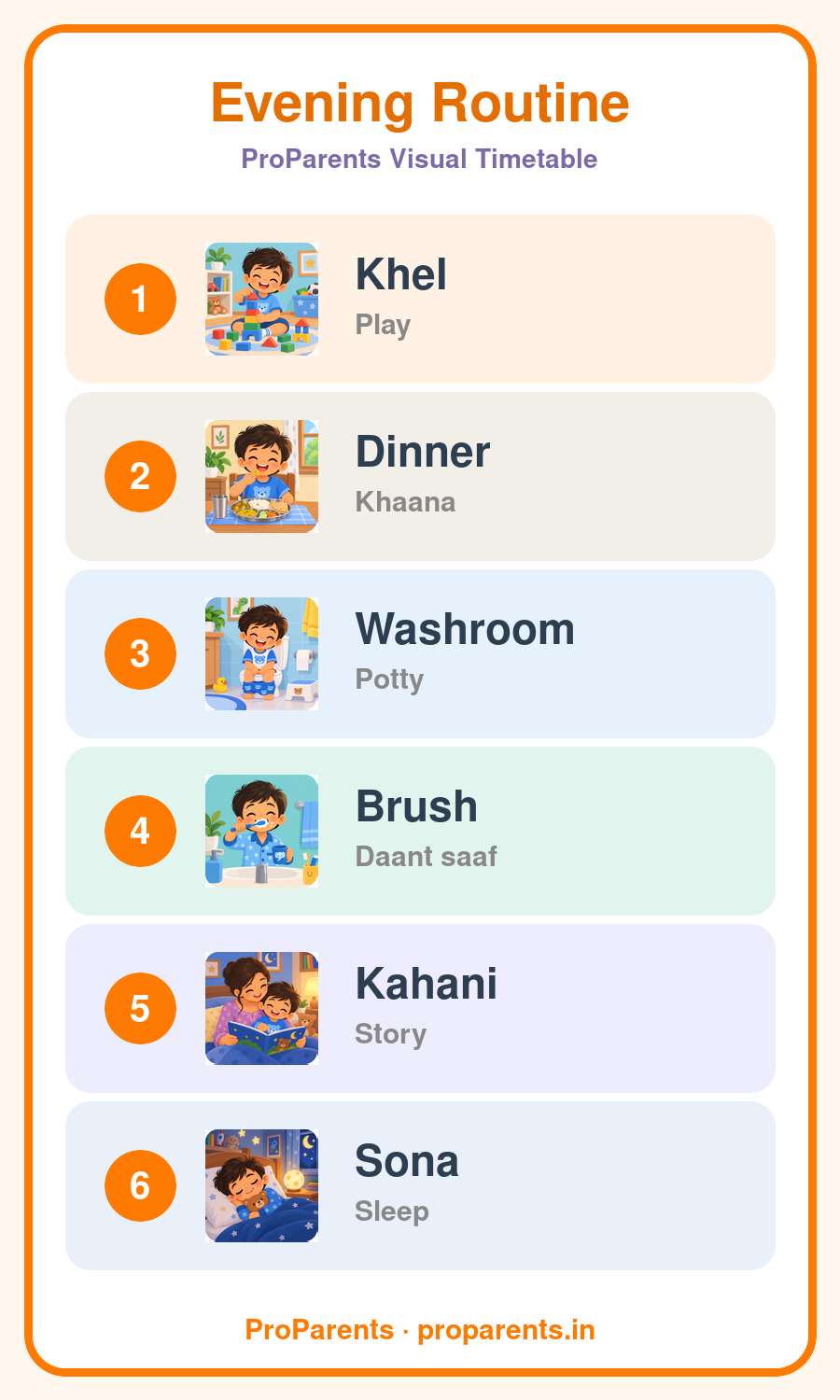
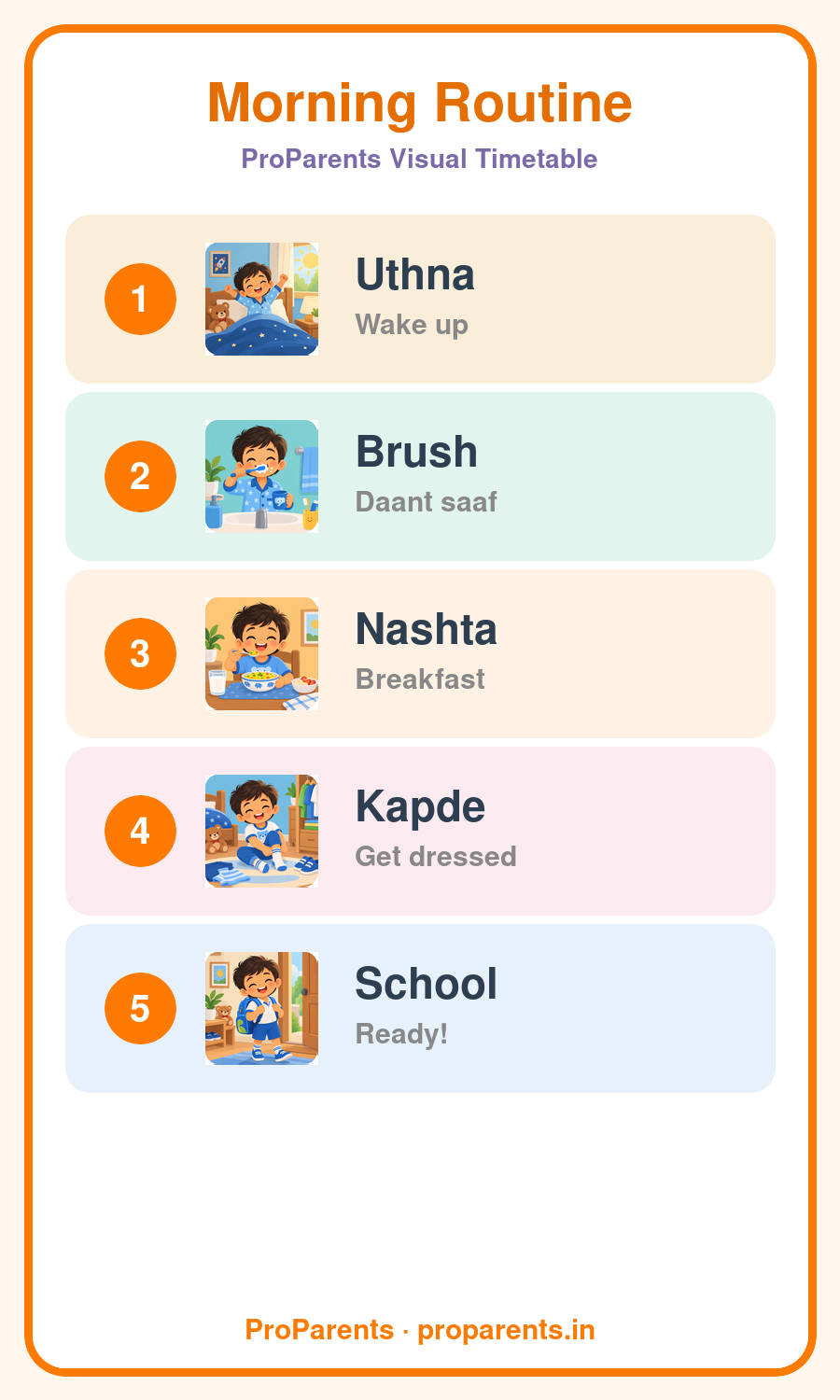
— or make your own personalised chart below —
Tap to add activities to the day:
Your child's day (edit the label or time, reorder, or remove)
My Day
Want the science behind it? It's a lesson in our free parenting course.
What is a visual timetable?
A visual timetable (or visual schedule) shows your child's day as a simple row of pictures — wake up, breakfast, play, bath, dinner, story, sleep. Young children can't yet tell time or read a clock, so words like "in five minutes" or "later" mean little to them. Pictures they understand. Seeing what comes next turns an unpredictable day into a clear, calm sequence.
Why they work — the science
Child-development research is consistent on one point: predictable routines help children feel safe. When a child can see what's coming, the uncertainty that drives anxiety and resistance drops — and with it, the daily battles over bath-time, brushing and bedtime. Visual schedules are a well-established, recommended early-childhood tool for exactly this reason. A predictable, visible routine also builds self-regulation over time: your child learns to move through transitions on their own, because the plan is right there on the wall.
How to make one (in 2 minutes)
- Add your child's name to personalise the chart.
- Tap the picture activities to build the day, in order.
- Reorder, rename, or add times so it matches your real routine.
- Download / print and stick it at your child's eye level.
Tips to get the most from it
- Keep it short — 5 to 7 steps for the part of the day that's hardest (usually the evening).
- Walk through it together each day, and let your child point to "what's next".
- Praise them for checking the chart themselves — that's the goal.
- Keep it consistent; the power is in the repetition.
Ready? Build your child's free visual timetable above — or learn the full science in our free parenting course.